Our Learning Groups
The Maths Club program is designed for children who are in years 2 to 7. We will group students by how they think mathematically, not by age or year level.
Students don’t all think about mathematics in the same way. So, when students are placed in the right group, they build confidence and progress steadily. When they’re not, they often rely on short-term strategies that don’t hold as maths becomes more complex.
Each group represents a different phase of mathematical development, with a focus on building deep understanding, sound reasoning and flexible problem-solving. These groups often span multiple year levels, as students develop at different rates.
Groups are named after constellations — timeless patterns used to bring structure and meaning to the night sky. In the same way, students learn to recognise patterns, build understanding, and see the bigger picture in mathematics.

Cygnus
Core number sense, additive thinking and structure
Like the swan gliding steadily across water, Cygnus represents calm, control, and a strong, steady base.
This group suits children who are developing confidence with number relationships, and whilst they still rely on counting for most calculations, they are ready to move beyond counting into more flexible thinking.
Students in Cygnus focus on developing strong additive thinking. They build confidence in combining, separating, and working with numbers in flexible ways. The emphasis is on clarity, accuracy, and forming the core structures that support all later mathematical thinking.
Cygnus Term 1 Course (8 lessons): Flexible Number Thinking
- place value relationships
- additive reasoning
- mental flexibility
- estimation
Cygnus Term 2 Course (8 lessons): Additive Strategies
- efficient mental strategies
- additive problem types
- representation models
- justification/explanation
Cygnus Term 3 Course (8 lessons): Additive Patterns & Equivalence
- numerical relationships
- balancing/equivalence
- generalisation
- early algebraic structure
Cygnus Term 4 Course (8 lessons): Reasoning with Number
- multi-step reasoning
- number-based investigations
- strategic thinking
- worded additive problems
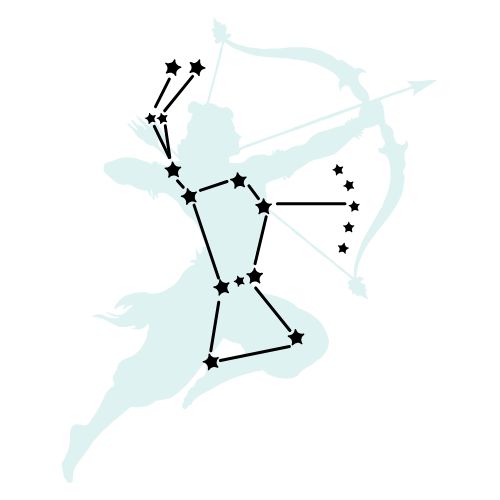
Orion
Growth through multiplicative thinking
Like the hunter moving with purpose, Orion represents action, direction, and forward momentum.
This group suits children who are ready to move from additive thinking to a much more powerful idea of multiples. If your child relies on repeated addition to solve problems, or struggles to recognise multiplicative patterns or understand basic algebra, this is the group for them.
In Orion, students move beyond counting into multiplicative thinking. They explore patterns, arrays, and scaling, learning to see structure and efficiency in number relationships. This group builds the ability to work more powerfully with numbers and is fundamental to algebraic thinking.
Orion Term 1 Course (8 lessons): Arrays & Multiplicative Structure
- arrays and area models
- multiplicative comparison
- efficient representation of number
- moving beyond repeated addition
Orion Term 2 Course (8 lessons): Multiplication, Division & Relationships
- inverse relationships
- factor relationships
- partitioning strategies
- multiplicative fluency and flexibility
Orion Term 3 Course (8 lessons): Scaling, Patterns & Ratio
- scaling quantities
- multiplicative patterns
- ratio foundations
- generalising relationships
Orion Stage 4 – Term 4 (8 lessons): Multiplicative Reasoning & Problem Solving
- multi-step multiplicative problems
- interpreting mathematical relationships
- strategic problem-solving
- applying multiplicative thinking across contexts
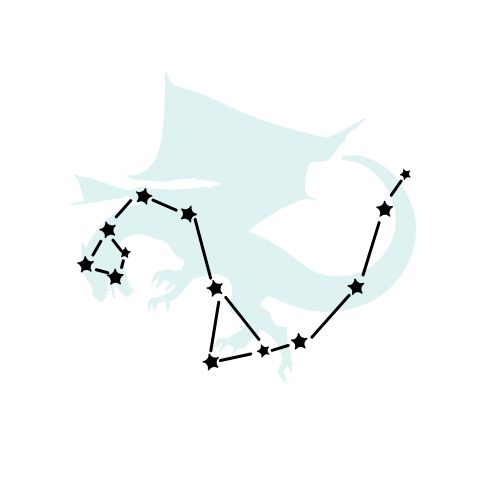
Draco
Restructuring and partitioning
Like the twisting form of the dragon, Draco represents movement, reshaping, and seeing structure from different angles.
This group suits children who are ready to deepen their understanding of fractions and parts of a whole.
Draco students learn to break numbers and quantities apart and reassemble them in strategic ways. They develop the ability to see parts within wholes, understand fractions as numbers, connect fractions to division and ratio, and rason about equi-partitioning.
Draco Term 1 Course (8 lessons): Equal Partitioning & Fraction Foundations
- equal partitioning
- fractions as parts of a whole
- visual fraction models
- reasoning about fair sharing
Draco Term 2 Course (8 lessons): Fractions as Numbers
- fractions on number lines
- equivalent fractions
- comparing and ordering fractions
- connecting fractions to division
Draco Term 3 Course (8 lessons): Fraction Relationships & Operations
- fraction relationships
- fraction addition and subtraction
- representing fractions in different ways
- reasoning about quantity and proportion
Draco Term 4 Course (8 lessons): Fractions, Ratio & Multiplicative Reasoning
- connecting fractions and ratio
- scaling and proportional thinking
- multi-step fraction problem solving
- explaining and justifying reasoning
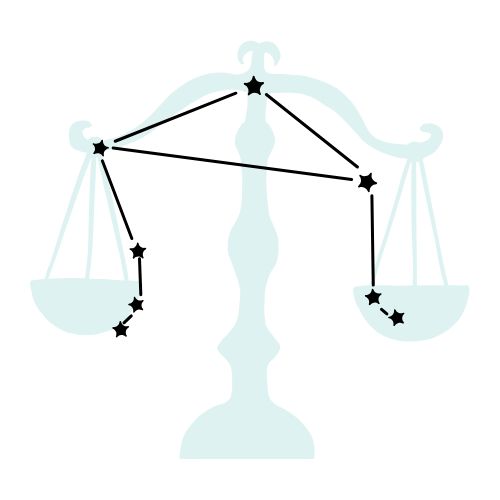
Libra
Balance and proportional reasoning
Like the scales in perfect balance, Libra represents fairness, proportion, and equilibrium.
This group suits children who are ready to work with ratios, rates, and percentages in a deeper and more connected way. They may be beginning to think about relationships between quantities and be ready to tackle more complex multi-step relational problems.
In Libra, the focus shifts to relationships between quantities. Students explore ratios, rates, percentages, all underpinned by the big idea of proportional thinking. This helps children develop an understanding of balance, proportion, and comparison across different contexts.
Libra Term 1 Course (8 lessons): Ratios & Comparative Thinking
- scaling quantities
- rates and unit rates
- proportional relationships
- interpreting multiplicative change
Libra Term 2 Course (8 lessons): Rates, Scaling & Proportion
- fractions on number lines
- equivalent fractions
- comparing and ordering fractions
- connecting fractions to division
Libra Term 3 Course (8 lessons): Percentages & Relational Thinking
- percentages as proportions
- connecting fractions, decimals and percentages
- percentage increase and decrease
- reasoning across representations
Libra Term 4 Course (8 lessons): Proportional Reasoning & Problem Solving
- multi-step proportional problems
- interpreting real-world relationships
- strategic reasoning and modelling
- justifying proportional thinking
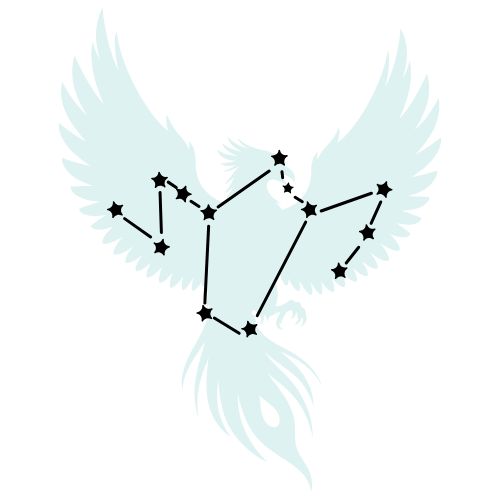
Phoenix
Generalising and algebraic thinking
Like the phoenix rising and transforming, this group represents insight, renewal, and seeing beyond the immediate.
This stage suits children who are ready to move beyond specific numbers into patters and general rules. Perhaps your child is ready to explore the fascinating world of algebra, send them to Phoenix!
Phoenix is where students begin to think beyond specific numbers. They identify patterns, form general rules, and engage with early algebraic thinking. The focus is on reasoning, abstraction, and expressing ideas that apply across many situations.
Phoenix Term 1 Course (8 lessons): Patterns & Generalisation
- recognising and extending patterns
- describing mathematical relationships
- forming general rules
- reasoning beyond specific numbers
Phoenix Term 2 Course (8 lessons): Variables & Algebraic Thinking
- understanding variables
- representing unknown quantities
- writing and interpreting simple expressions
- connecting patterns to algebra
Phoenix Term 3 Course (8 lessons): Functional Thinking & Relationships
- input-output relationships
- graphical and numerical patterns
- reasoning about change
- generalising across contexts
Phoenix Term 4 Course (8 lessons): Algebraic Reasoning & Problem Solving
- multi-step algebraic problems
- forming and testing conjectures
- strategic reasoning and justification
- communicating abstract mathematical ideas
Choosing the Right Group
Not sure where your child fits?
Most parents aren’t, and that’s normal.
OPTIONS:
- Start in Group 1 – Cygnus
- Choose a group based on the descriptions above
- Or begin with a 1:1 assessment for precise placement